← Home · Investigation

Standard Penetration Test (SPT) in Milton Keynes

Together, we solve the challenges of tomorrow.

LEARN MORE →

Milton Keynes sits on a geological jigsaw. The western expansion areas overlie dense Oxford Clay while the city centre rests on glacial till with pockets of sand and gravel. This mix creates unpredictable bearing conditions. A Standard Penetration Test (SPT) cuts through the guesswork. The rig drives a split-spoon sampler 450mm into the ground. Technicians record the blow count for every 150mm of penetration. That N-value maps directly to soil density and strength. Developers across the MK grid squares use this data to size footings, estimate settlement and decide whether piled foundations make economic sense. On sites near the River Ouzel or Grand Union Canal the water table sits high and the SPT reveals exactly where the soft layer begins. The numbers don't lie and neither should your ground investigation.

SPT N-values in Milton Keynes can shift from 4 to 40 within two metres of depth. That's the difference between a pad footing and a CFA pile.

Our approach and scope

Sites in Bletchley often hit sandier profiles than those in Stony Stratford where clay dominates. The difference matters. One needs drainage consideration, the other needs swelling potential assessed. A single SPT boring in each zone tells a completely different story. The test runs to BS 5930:2015+A1:2020 and BS EN ISO 22476-3. Our crew logs every 300mm interval. They note soil type, consistency, colour and any groundwater strike. The split barrel retrieves a disturbed sample. That sample goes straight to a UKAS-accredited lab for classification. For clay sites we often recommend pairing the SPT with Atterberg limits testing to quantify plasticity. On granular soils a grain size analysis confirms the grading curve and helps predict drainage behaviour under load.
Standard Penetration Test (SPT) in Milton Keynes
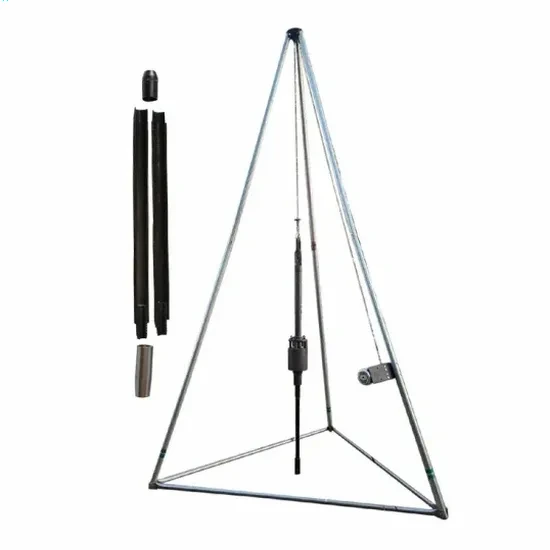
Technical reference image — Milton Keynes

Local considerations

Eurocode 7 requires design by calculation for all permanent works. In Milton Keynes that means you cannot assume a generic bearing capacity from a desk study. The variable drift geology, pockets of soft alluvium along the floodplain and occasional solution features in the underlying limestones create risk that only in-situ testing can quantify. An SPT skipped is a liability accepted. Differential settlement shows up as cracks in masonry within the first two years. Retrofit underpinning costs ten times the price of a single borehole. The NHBC and most warranty providers want to see SPT logs before sign-off on new-build plots. Commercial lenders ask the same question. Our reports include factual logs, N-value plots and derived parameters ready for your structural engineer to plug directly into the foundation design.

Need a geotechnical assessment?

Reply within 24h.

Email: contact@geotechnical-engineering1.com

Technical data

ParameterTypical value
Standard followedBS 5930:2015+A1:2020, BS EN ISO 22476-3
Hammer typeSafety hammer with automatic trip
SamplerStandard split-spoon (35mm ID, 50mm OD)
Drive length450mm in three 150mm increments
Typical depth range in MK10m to 25m, deeper for piled schemes
Borehole diameter100mm to 150mm through overburden
Reporting outputN-value vs depth, soil descriptions, groundwater log

Other technical services

01

SPT Borehole Drilling

Track-mounted or limited-access rigs reaching 25m depth. We log Oxford Clay, till and made ground with blow counts every 150mm. Includes disturbed sampling and groundwater monitoring installation where required.

02

Combined SPT and Laboratory Testing

Every SPT run produces a bag sample. We route these through UKAS-accredited labs for classification, Atterberg limits, shear strength and chemical testing for aggressive ground conditions.

03

Foundation Recommendation Reports

We convert N-values into bearing capacity estimates, settlement predictions and pile depth recommendations. The report includes factual logs, interpretive sections and design parameters ready for your structural engineer.

Reference standards

BS 5930:2015+A1:2020 - Code of practice for ground investigations, BS EN ISO 22476-3:2005+A1:2011 - Geotechnical investigation and testing. Field testing. Standard penetration test, Eurocode 7 (BS EN 1997-1:2004+A1:2013) - Geotechnical design, BS EN 1997-2:2007 - Ground investigation and testing

Frequently asked questions

How much does an SPT borehole cost in Milton Keynes?

A single SPT borehole to 10m depth typically ranges from £380 to £520 depending on access conditions, traffic management requirements and whether you need a window sampler starter pit through the made ground. Deeper holes for piled foundations cost proportionally more. Every quote includes the rig, operator, engineer log and factual report.

How many SPT boreholes does my Milton Keynes site need?

BS 5930 and Eurocode 7 guide the spacing based on geotechnical category. For a typical residential plot in MK with uniform Oxford Clay, three boreholes to 10m often suffice. Larger commercial schemes on variable glacial till may need points on a 20m to 30m grid. We recommend the layout after reviewing the site plan and any historical borehole records from the BGS.

What depth do you drill for an SPT in Milton Keynes?

For standard two-storey housing on Oxford Clay we typically stop at 10m to 12m, which captures the weathered zone and the competent material below. For piled foundations or sites near the floodplain we extend to 20m or 25m to check for soft layers at depth. The depth is always confirmed after seeing the first borehole log.

Can you do SPT testing on a confined site with limited access?

Yes. We run compact tracked rigs that fit through a standard garden gate and work on slopes. For interior access or basement extensions we can use a hand-operated dynamic probing rig with correlations to SPT N-values, though direct SPT with a small rig is always preferred for compliance with BS 5930.
Location and service area

We serve projects in Milton Keynes and surrounding areas. More info.

View larger map