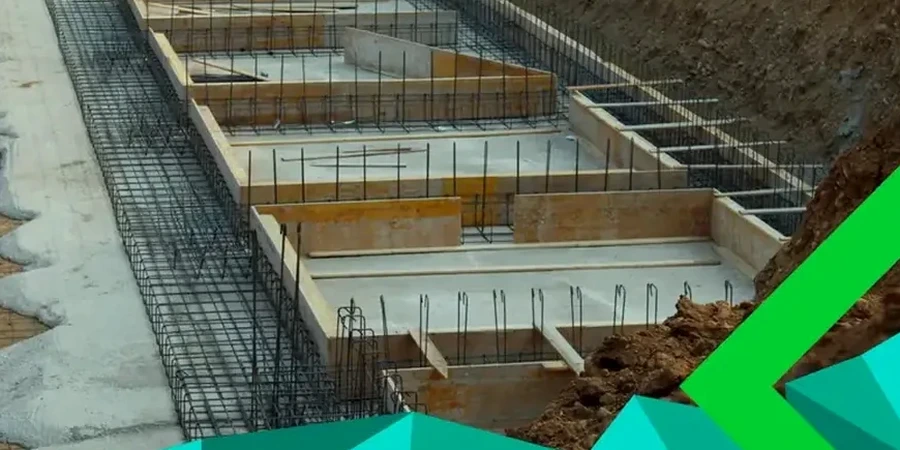
The geology beneath Milton Keynes is dominated by the Oxford Clay Formation, interspersed with glacial head deposits and pockets of river terrace gravels along the Ouzel Valley. A desk study published by the British Geological Survey maps much of the city over Jurassic mudstone, which weathers to a stiff, sometimes desiccated clay crust at surface. That crust can mislead. It often sits above softer material. For shallow foundation design, the real challenge is the shrink-swell potential of the weathered clay and the seasonal fluctuation in moisture that drives its behaviour. We see this routinely in areas from Stacey Bushes to Broughton. The bearing capacity is there, but only if the founding depth respects the active weathering zone. Before breaking ground on a strip or pad footing, we often pair the design analysis with an in-situ permeability test to confirm drainage assumptions, because perched water in the granular head layers can change the effective stress profile entirely.
Designing a shallow foundation in Milton Keynes means respecting the seasonal moisture cycle of Oxford Clay: the ground changes shape before it loses strength.
Our approach and scope
On Milton Keynes sites, we consistently observe that the upper 1.5 metres of clay are fractured and oxidised, with roots penetrating deep into the desiccation cracks. A stiff fractured crust over soft intact clay creates a bearing profile that looks adequate on paper but performs poorly under sustained load if the crust is not stripped. Our shallow foundation design process therefore begins with a careful assessment of the active zone, not just the intact strength at 1.5 metres. We design to the serviceability limit state first, then verify the ultimate limit state. For strip footings on variable ground, we specify a compacted granular blanket over the prepared clay surface, which bridges minor soft spots and provides a uniform bearing stratum. Where the clay transitions into silty head deposits, differential settlement becomes the controlling design criterion. Ground beam stiffness is then increased to limit angular distortion to less than 1/500, as recommended in BS EN 1997-1 for framed structures. The water table in Milton Keynes sits relatively high across the eastern wards, so drained parameters govern the design in most cases.
Site-specific factors
The most common site investigation for shallow foundations in Milton Keynes starts with a tracked mechanical excavator, opening trial pits to 3.5 metres or until refusal. It is simple, fast, and reveals the macro-structure of the clay and head deposits directly. The risk we catch on these digs is not failure of the intact clay block, but the presence of softened zones around old root systems or backfilled farm drains that were never recorded. A single soft spot under a corner of a pad footing can produce differential movement that cracks masonry in the first dry summer. We log every trial pit face, measuring the depth of desiccation cracks and noting the colour change from brown oxidised crust to dark grey unweathered mudstone. That boundary is the real founding level. Ignore it and the foundation will move. We have seen it happen on extensions to houses in the older parts of Wolverton and New Bradwell, where the existing footing sits on good clay at depth but the new addition was placed too high, into the weathered zone.
Quick answers
What is the typical cost for a shallow foundation design package in Milton Keynes?
For a standard residential project in Milton Keynes, a complete shallow foundation design package — including ground investigation, soil profiling and bearing capacity calculations — typically ranges from £1,410 to £2,370. The final figure depends on the number of trial pits, the depth to competent clay and whether plate load testing is required to verify the allowable bearing pressure.
How deep do strip footings need to go in the Oxford Clay around Milton Keynes?
Strip footings in Milton Keynes are generally taken to a minimum of 0.9 metres below the stripped surface, but the critical depth is set by the base of the weathered, desiccated crust. We look for the transition from brown oxidised clay to dark grey intact mudstone. That boundary often sits between 1.0 and 1.5 metres depth. Founding above it risks seasonal heave and shrinkage.
Do I need a ground investigation for a single-storey extension on clay in Milton Keynes?
Yes. Even for a single-storey extension, the shallow foundation must be sized to the actual ground conditions, not a generic assumption. The Oxford Clay varies significantly across Milton Keynes, and a trial pit can reveal softened zones, old backfilled features or a perched water table that would alter the foundation depth and reinforcement requirements.