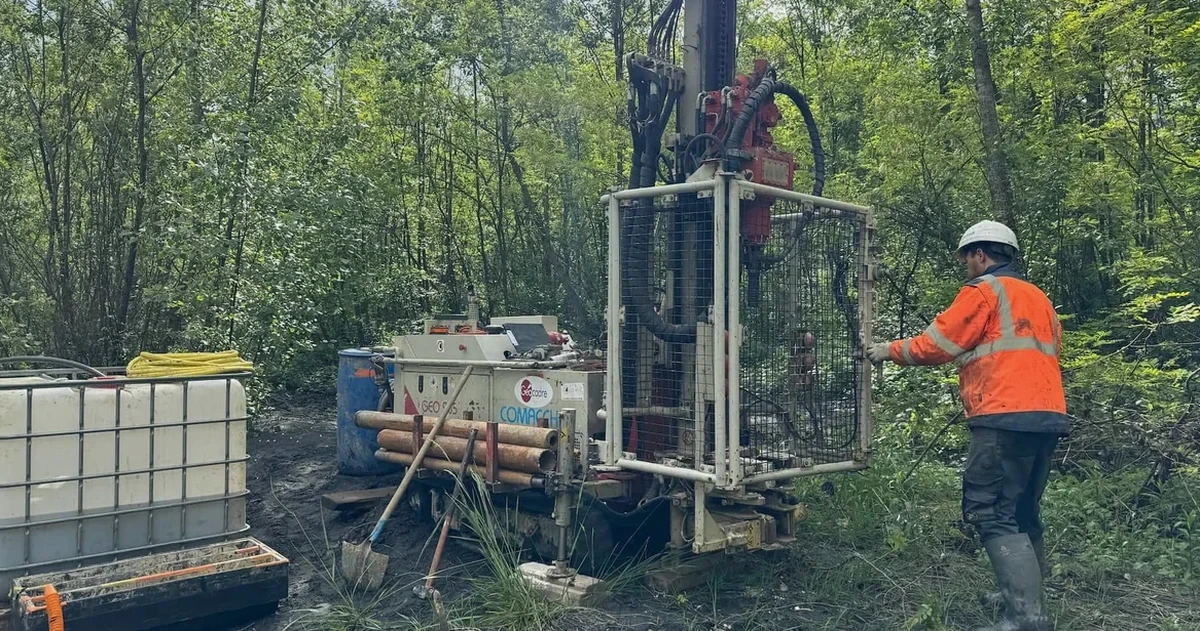
The glacial till overlying the Oxford Clay Formation creates a two-speed geology across Milton Keynes. Drainage shifts abruptly between the gravel terraces of the Ouse Valley and the stiff, overconsolidated clays of the plateau. This contrast demands a soil mechanics study that reads the landscape before touching the sampler. Borehole logs from Central Milton Keynes often show desiccated crust in the upper 1.5 metres, while sites near Willen Lake encounter fully softened clay at shallow depth. The laboratory programme must match these conditions. Index testing alone is not enough. Strength parameters from triaxial compression, consolidation history from oedometer tests, and classification to BS 5930:2015 build the model that underpins foundation design. A single missing parameter can shift the predicted settlement by millimetres that matter.
Oxford Clay does not warn you before it fails. Pore pressures build slowly, and the first sign is often a crack in a slab that should not be there.
Quick answers
How much does a soil mechanics study cost for a single house plot in Milton Keynes?
For a typical single dwelling plot requiring a window sample borehole, classification tests, and triaxial strength on selected specimens, the soil mechanics study usually falls between £2,120 and £3,910. The spread depends on depth, number of samples, and whether oedometer consolidation or chemical testing is required. If the site is within a known shrink-swell zone, the extra testing adds value that far outweighs the cost.
What laboratory tests does Building Control expect for a new build on Oxford Clay?
Building Control typically requires Atterberg limits to confirm plasticity, a particle size distribution to classify the soil, and undrained triaxial tests to derive the short-term bearing capacity. If the plasticity index exceeds 20%, they will also want swell pressure data or a BRE SD1 sulphate suite if concrete is in contact with the ground. We compile the results into a geotechnical interpretive report that satisfies NHBC Chapter 4.2.
How long does the laboratory programme take from sample collection to report?
Classification tests turn around in roughly five working days. Triaxial and oedometer tests require longer — consolidation stages alone need time for pore pressure equalisation, so allow three to four weeks for the full strength and compressibility suite. We can issue an interim factual report with classification data early to keep the design programme moving.
What is the difference between total stress and effective stress parameters, and which one do I need?
Total stress parameters (undrained shear strength, cu) model the soil as if no drainage occurs during loading. This applies to rapid construction on low-permeability clay — most Milton Keynes greenfield sites. Effective stress parameters (c' and φ') describe the soil skeleton behaviour when pore pressures have dissipated. You need effective stress for long-term stability analysis of slopes and retaining walls. We recommend running both when the design includes permanent cuttings.